Key takeaways
- All-on-4 and All-on-6 give you a full set of fixed teeth on four or six implants per jaw.
- Tilted implants often avoid the need for bone grafting.
- For very little bone in the upper jaw, pterygoid and zygomatic implants are options to consider.
- A fixed temporary bridge can often be fitted within a few days of surgery.
What is full mouth rehabilitation with dental implants?
Full mouth rehabilitation means rebuilding all the teeth in one or both jaws so you can chew, smile and speak comfortably again. When most teeth are missing or can't be saved, dental implants are the most stable way to do it: a full arch of fixed teeth is screwed onto a small number of implants in the jawbone.
Unlike a removable denture, implant-supported teeth don't move, don't cover the palate and don't need adhesive. They also put chewing pressure back into the jawbone, which helps slow the bone loss that happens after teeth are lost.
Who is it for?
- People with many missing, broken or loose teeth that can't be saved
- Denture wearers whose dentures slip, hurt or make eating difficult
- Patients with advanced gum disease that has loosened most teeth
- People who were told they don't have enough bone for implants
All-on-4 vs All-on-6: what's the difference?
Both support a full fixed bridge of 10–14 teeth. The difference is the number of implants and how they're placed.
Interactive · switch between the two
All-on-4 vs All-on-6: where the implants go
All-on-4: four implants, two of them angled
Two straight implants at the front and two longer implants tilted at up to about 45° at the back. Tilting lets the back implants use the stronger bone in front of the sinus (upper jaw) or the nerve (lower jaw), so a bone graft is often not needed.
- Implants per jaw
- 4
- Best for
- Moderate bone loss, patients who want to avoid grafting
- Teeth on the bridge
- Usually 10–12
All-on-6: six implants spread across the jaw
Six implants share the chewing load more evenly and support a slightly longer bridge with more back teeth. It needs a little more bone along the jaw, which a 3D scan confirms before planning.
- Implants per jaw
- 6
- Best for
- Good bone, strong bite, patients who want the extra back-up of more implants
- Teeth on the bridge
- Usually 12–14
Simplified diagram. The exact number and position of implants is planned on your CBCT scan.
Which one is better?
Neither is better for everyone. All-on-4 is designed to work with less bone and often avoids grafting, which can mean fewer surgeries and a shorter treatment. All-on-6 needs a little more bone, but spreads the chewing load over more implants and can support more back teeth. We recommend one after measuring your bone on a 3D CBCT scan.
Zygomatic implants: fixed teeth with severe upper-jaw bone loss
Zygomatic implants are much longer than standard implants, about 30–52 mm. They pass from the gum through the side of the sinus and anchor in the cheekbone (zygoma), which stays dense even when the upper jaw has almost no bone left. They were developed by Professor Brånemark, who also pioneered modern dental implants.
- Used only in the upper jaw
- Can avoid large bone grafts and sinus lifts, and the months of healing they need
- Often combined with two to four regular implants at the front
- Fixed temporary teeth can often be fitted within days
- Long-term studies report high survival rates, generally above 95%
Zygomatic implant surgery is advanced and is planned with an oral and maxillofacial surgeon, usually under sedation or general anaesthesia. It's considered when other options aren't possible, after a detailed CBCT evaluation.
Pterygoid implants: using bone behind the upper jaw
At the very back of the upper jaw, behind the last molar, there's a dense area of bone called the pterygoid plate. Pterygoid implants are placed at an angle into this bone, behind the sinus.
- Give support for back teeth without a sinus lift
- Reduce the long unsupported 'cantilever' at the end of a full-arch bridge
- Often combined with All-on-4 or All-on-6 in the upper jaw
- Can usually carry fixed teeth soon after surgery
Sinus lift and bone grafting: rebuilding the bone
Sometimes the best long-term answer is to rebuild the bone first. Drag the slider to see how the amount of bone in the upper back jaw changes the options.
Interactive · drag the slider
How much bone is left in your upper back jaw?
Enough bone for a standard implant.
General guide only. Your options depend on bone width and quality too, which we measure on a 3D CBCT scan.
Sinus lift
The maxillary sinus sits just above the upper back teeth. After teeth are lost, the sinus often expands downwards while the bone shrinks. A sinus lift gently raises the sinus membrane and places graft material underneath to create new bone.
- Crestal (internal) sinus lift: done through the implant site when about 5–8 mm of bone is left, often with the implant in the same visit
- Lateral-window sinus lift: a small window on the side of the jaw for larger lifts when less bone is left, usually healing 4–9 months before or with the implant
Bone grafting
A bone graft adds bone where the ridge has become too thin or short. We use natural bone substitutes, sometimes mixed with your own bone, covered with a protective membrane. Common types include socket preservation after an extraction, ridge augmentation to widen a thin ridge, and block grafts for larger defects.
Less bone? Bone grafts, sinus lifts and other options explained
Compare your options
Full-mouth implant options at a glance
Whether fixed temporary teeth can be fitted soon after surgery depends on how firmly the implants are held on the day. Pterygoid and zygomatic implants are advanced options, planned after a detailed specialist evaluation.
The full-mouth implant journey, step by step
Most patients have a fixed temporary bridge within a few days of surgery. This is often called 'teeth in a day' or 'teeth in 3 days'.
Treatment timeline
From failing teeth to fixed teeth
- Day 1
Consultation and 3D scan
Examination, CBCT scan, photos and a digital scan. We explain your options and give you a written plan and estimate.
- Week 1–2
Digital planning
Implant positions are planned on the 3D scan, and the new smile is designed with you.
- Surgery day
Implants placed
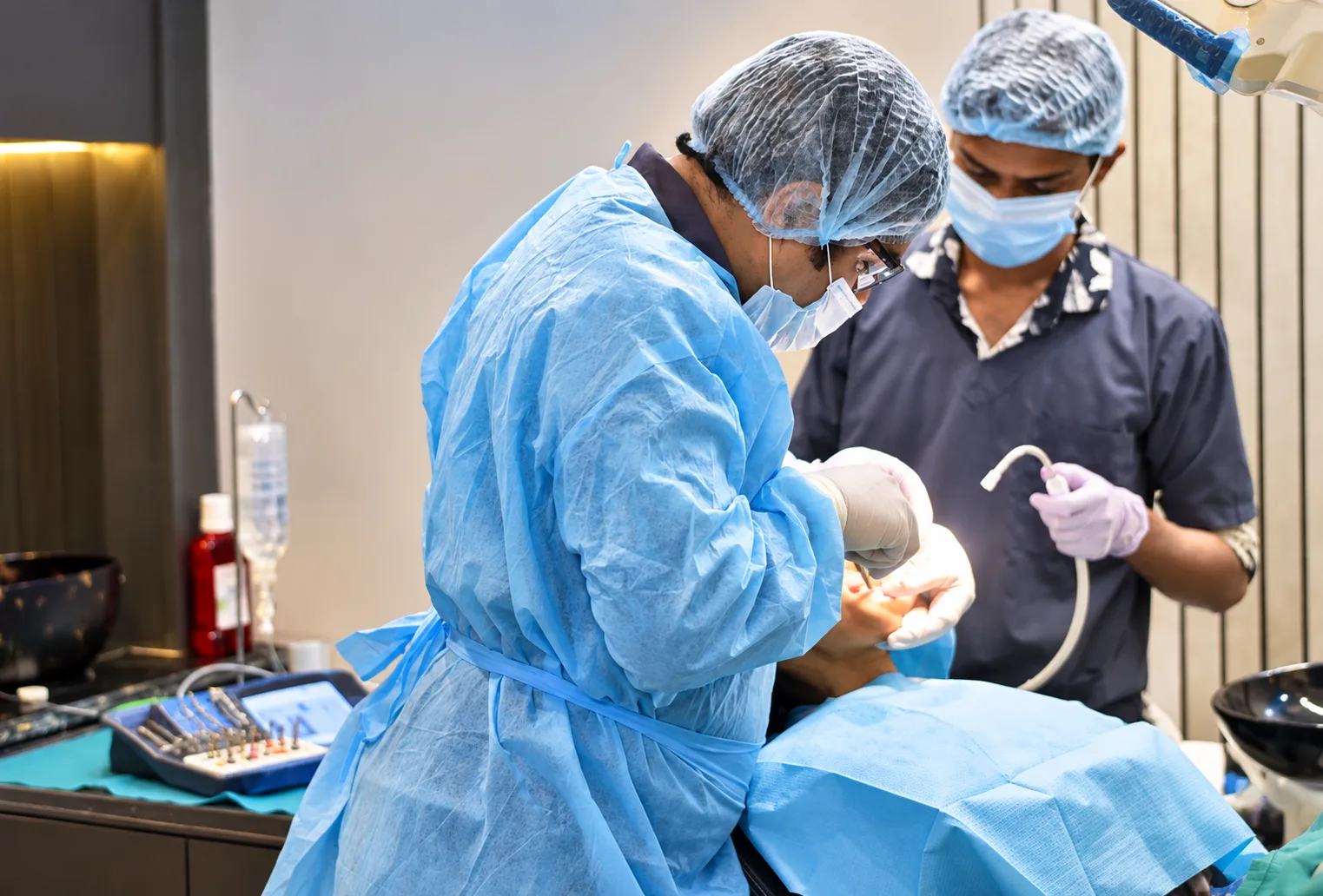
Failing teeth removed and implants placed in the same visit, under local anaesthesia with sedation if you prefer.
- 1–3 days later
Fixed temporary teeth
When the implants are firmly held, a fixed temporary bridge is screwed in, so you leave with teeth.
- 3–6 months
Healing
The implants fuse with the bone. Soft foods at first, then a gradually normal diet.
- Final visit
Final fixed teeth
A strong final bridge (zirconia, or acrylic on a titanium frame) is fitted and your bite is fine-tuned.
If a bone graft or sinus lift must heal first, fixed teeth come later. A removable temporary set is provided in the meantime.
A real All-on-6 case from our clinic
Real patient · tap each step
Upper jaw rebuilt on six implants
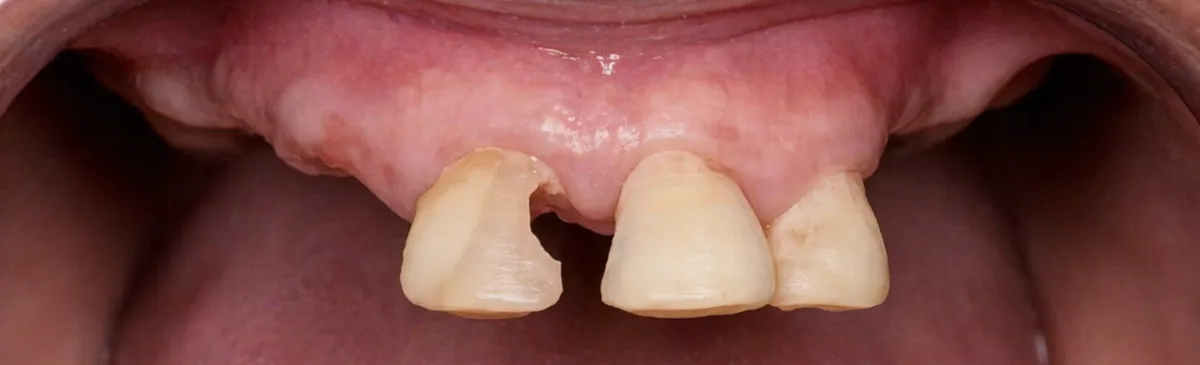
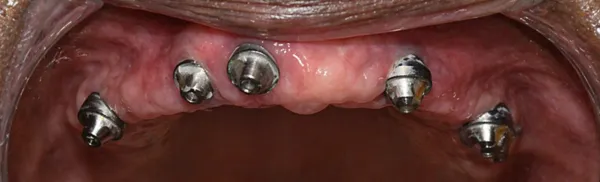
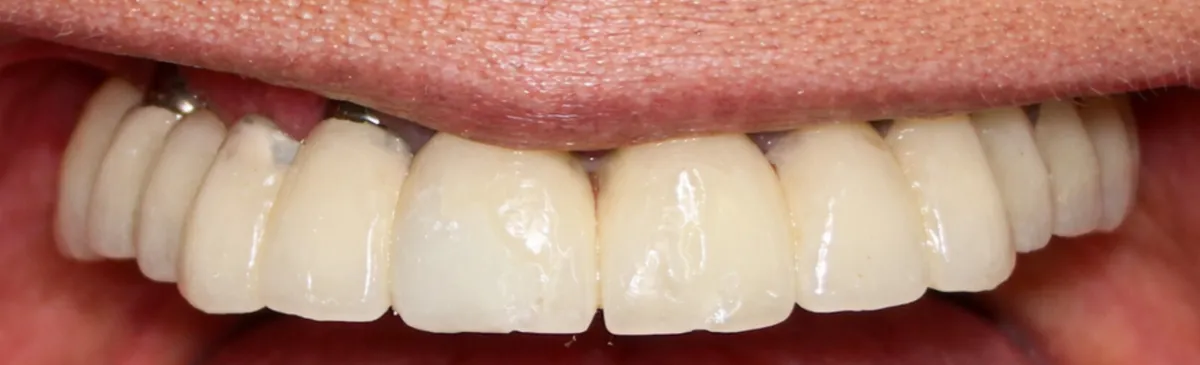
Treatment at Healing Touch Dental, Gurgaon. Every patient's result is different.
Which option might suit you?
Answer three quick questions to see the options often considered in situations like yours.
1-minute check
Which full-mouth option might suit you?
Options often considered
A guide only. Your options are confirmed after a CBCT scan and examination.
Full mouth dental implant cost in Gurgaon
The cost of full mouth rehabilitation depends on the number of implants, the implant brand, whether you need a bone graft, sinus lift, pterygoid or zygomatic implants, and the material of the final bridge. That's why we quote it in writing after your CBCT scan.
- Implants from ₹19,500 each (Adin / Quickdent, Israel), ₹25,000 (Dio / Dentium, South Korea), ₹27,500 (CWM super-hydrophilic), ₹35,000 (Nobel Biocare) and ₹40,000 (Straumann).
- At our Palam Vihar clinic, Israeli implants are currently offered from ₹18,500 and South Korean implants from ₹24,500.
- The fixed bridge, bone grafts, sinus lifts and zygomatic or pterygoid implants are quoted separately after 3D planning.
- 0% EMI is available on selected treatments.
Myths about full-mouth implants
Tap each card to see the facts.
Looking after full-arch implants
- Clean around and under the bridge every day with a water flosser or interdental brushes.
- Visit us for check-ups and professional cleaning every 3 to 6 months.
- Wear a night guard if you grind your teeth, to protect the bridge.
- Don't smoke. Smoking is one of the biggest risks for implant problems.
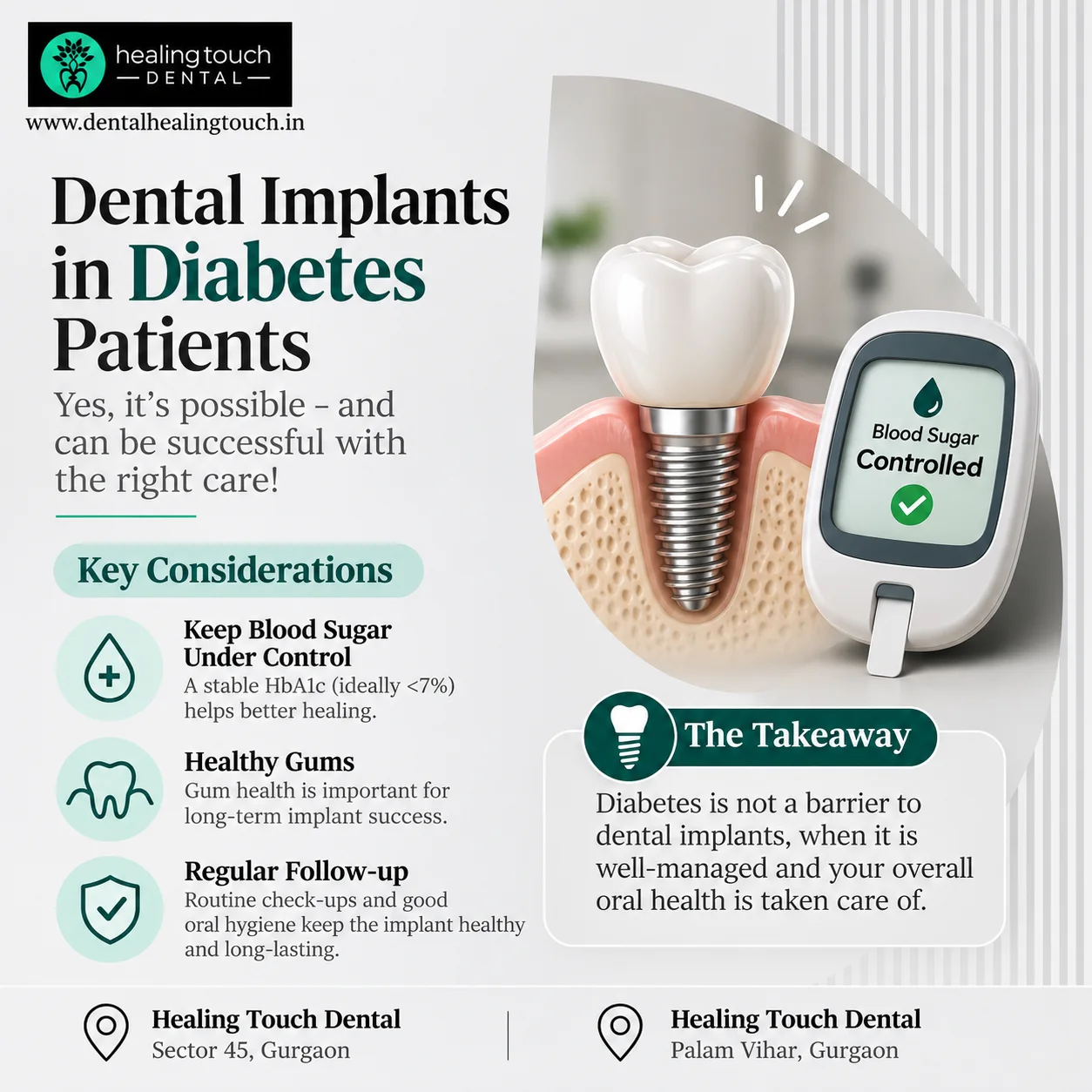
- Keep diabetes well controlled; it helps the gums around your implants stay healthy.
Full-mouth implant consultation
Tired of loose dentures or failing teeth? Find out which fixed option suits you.
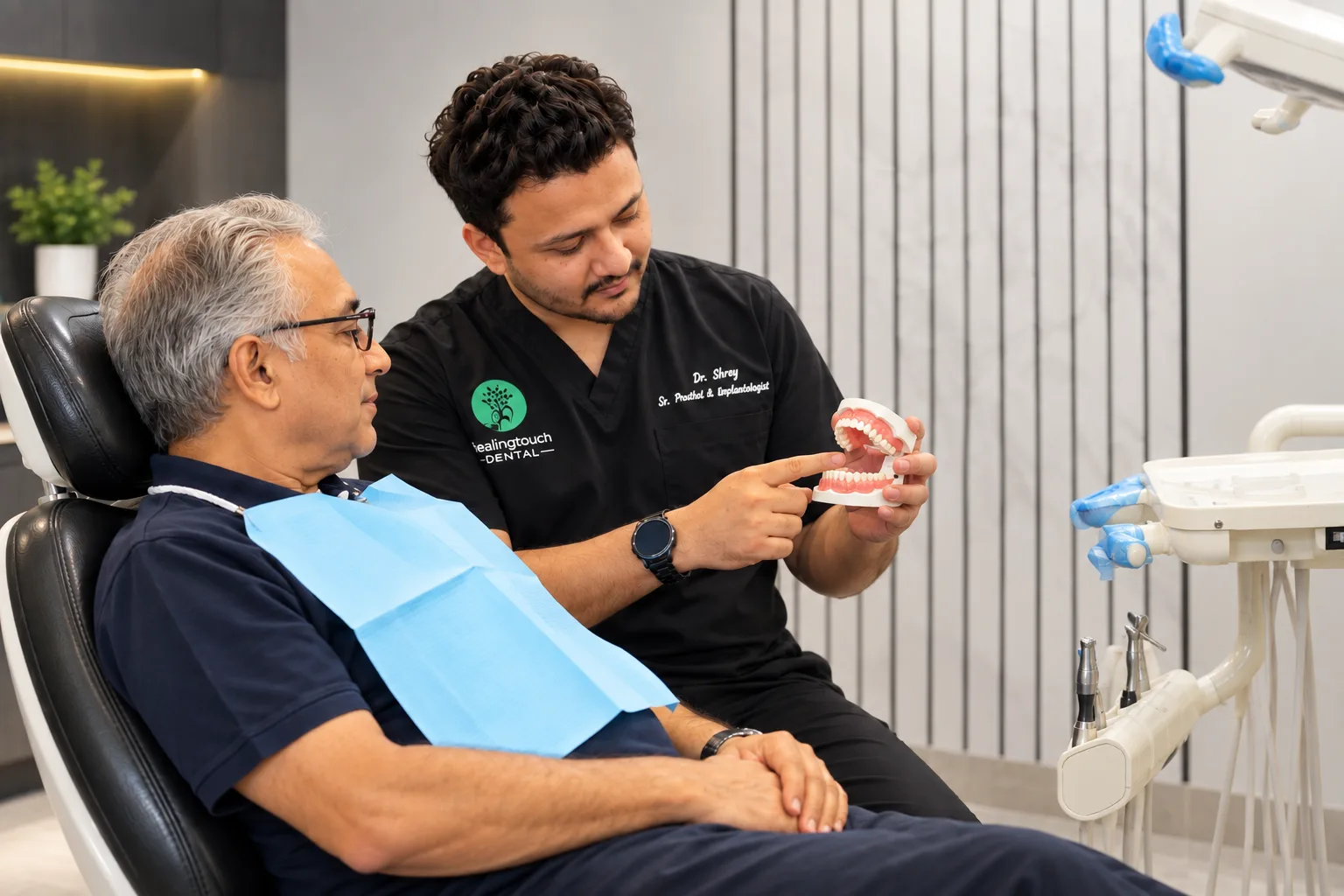
We'll examine you, take a 3D scan, explain All-on-4, All-on-6 and the other options that fit your bone, and give you a written estimate.
Frequently asked questions
What is the difference between All-on-4 and All-on-6?
Both give you a full fixed set of teeth. All-on-4 uses four implants with the back two tilted, so it often avoids bone grafting. All-on-6 uses six implants to spread the bite over more support and needs a little more bone.
How much do full mouth dental implants cost in Gurgaon?
It depends on the number and brand of implants, the bridge material and whether you need a bone graft, sinus lift or zygomatic implants. Implants at our clinic start from ₹19,500 each, and we give a written estimate after a 3D scan.
Can I get fixed teeth on the same day?
Often, yes. If the implants are firmly held on the day of surgery, a fixed temporary bridge is usually fitted within one to three days. The final bridge is made after healing.
What are zygomatic implants?
Long implants that anchor in the cheekbone instead of the upper jawbone. They're used when the upper jaw has severe bone loss and can avoid large bone grafts and sinus lifts.
What are pterygoid implants?
Implants placed at an angle into the dense pterygoid bone behind the upper jaw. They support the back teeth of a full-arch bridge without needing a sinus lift.
Do I need a bone graft for All-on-4?
Usually not. All-on-4 was designed to use the available bone by tilting the back implants. Grafting is sometimes still needed, which your CBCT scan will show.
Is full mouth implant surgery painful?
It's done under local anaesthesia, with sedation available, so you shouldn't feel pain during surgery. Swelling and soreness for a few days afterwards are normal and are managed with medicines.
How long do All-on-4 and All-on-6 implants last?
With good home care and regular check-ups, the implants can last for decades. The bridge may need maintenance or replacement after many years of use.
This article is for general information and doesn't replace a dental examination. Prices mentioned are starting prices at the time of writing.